

FRP stair nosing installation on checker plate
When working with thin checkerplate sheets—metal plates with a raised pattern, often used for stairs—it’s important to use screw fixing for several reasons. Let’s break down why this matters, especially for sheets that are on the thinner side (usually between 3 mm thick).
Why use screws for thin checkerplate sheets?
- Stops Flexing and Movement:
- Thin checkerplate sheets flex or move when walked on. This can make stair nosings (the edge pieces) less secure if only glue is used.
- Screws anchor the stair nosing to the checkerplate, stopping it from shifting or lifting.
- Provides a Strong Hold:
- Glue alone might not hold thin, flexible metal. Screws make sure the nosing stays in place even with regular use.
- This keeps the stairs safe, since loose nosings can be a tripping hazard.
- Helps with Rolled Edges:
- Checkerplate often has a rolled (curved) edge. If the stair nosing only covers a small part of the step (like a 10 mm turn-down), the metal can flex more. Screws are needed to keep everything tight and secure.
How is screw fixing done?
- Installers use self-tapping or self-drilling screws.
- Self-tapping screws need a small hole drilled first, then they cut their own threads as you screw them in.
- Self-drilling screws drill their own hole and cut threads at the same time, making installation faster.
- A shallow countersink pilot hole lets the screw head sit flush with the surface. This keeps the finish smooth and stops the screw from catching on shoes or objects.
- Stainless steel screws (like 316 grade) are best—they resist rust and last longer.
Example:
- If you only use glue, the nosing might lift or move over time. Add screws to lock the nosing in place and make the stairs safer and more durable.
FRP stair nosing installation on checker plate summary
- FRP (Fibre Reinforced Polymer): A strong, lightweight material used for stair nosings.
- Countersink Pilot Hole: A shallow hole that lets a screw sit flat or just below the surface, making the finish smooth.
- Self-Drilling Screw: A screw that drills its own hole and cuts threads as it goes in—no pre-drilling needed.
- Self-Tapping Screw: A screw that makes its own threads but needs a pre-drilled hole to start.
- Turn-Down: The part of the nosing that bends over the stair edge. A longer turn-down (>25 mm) can allow for adhesive-only fixing.
- Checker Plate: A metal sheet with a raised pattern for grip, often used on stairs.
- FRP (Fibre Reinforced Polymer): A strong, lightweight material used for stair nosings.
- Countersink Pilot Hole: A shallow hole that lets a screw sit flat or just below the surface, making the finish smooth.
- Self-Drilling Screw: A screw that drills its own hole and cuts threads as it goes in—no pre-drilling needed.
- Self-Tapping Screw: A screw that makes its own threads but needs a pre-drilled hole to start.
- Turn-Down: The part of the nosing that bends over the stair edge. A longer turn-down (>25 mm) can allow for adhesive-only fixing.
How to install FRP stair nosing on checker plate stairs
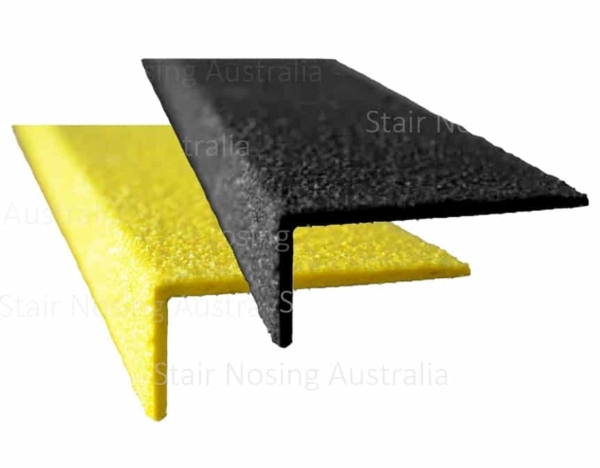
Durable black and yellow FRP stair nosing designed for enhanced safety on stairs.
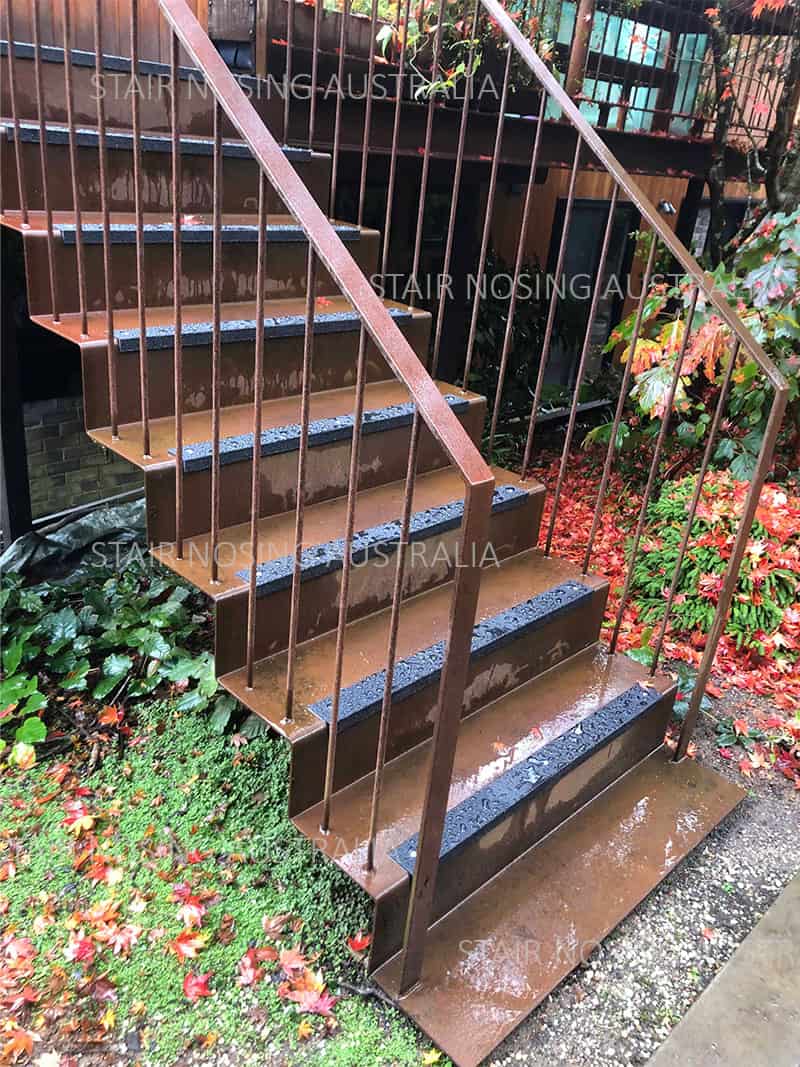
Durable outdoor stair nosing with anti-slip surface