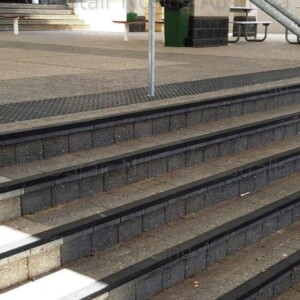
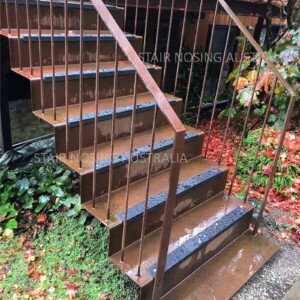
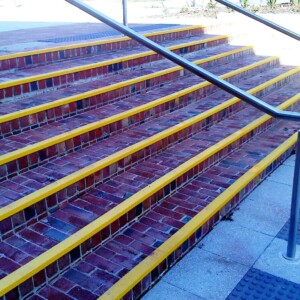
FRP stair nosing
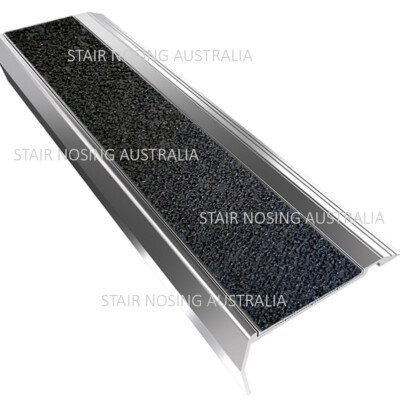
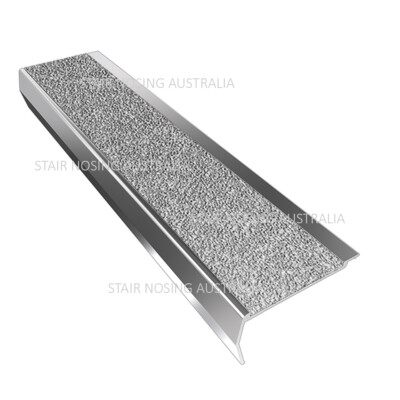
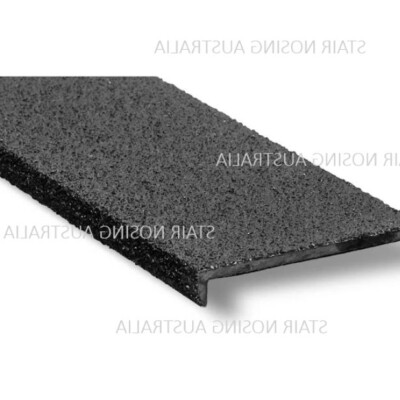
Fiberglass (FRP) industrial stair nosing Profile 70
This industrial stair nosing is the ideal solution for environments such as industrial, commercial, and marine environments that need robust and reliable performance. By using our durable stair nosing, you can enhance safety and durability while ensuring it withstands the harshest conditions.
Industrial stair nosing environments
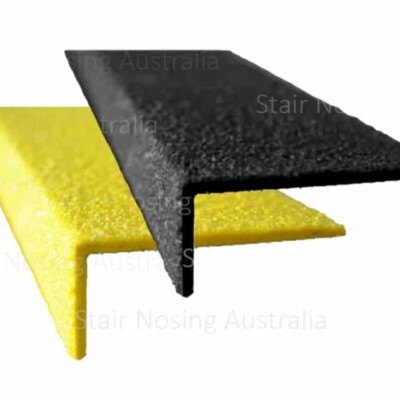
The FRP Stair Nosing 70, the ideal solution for industrial areas that prioritize safety. This product delivers superior non-slip performance while resisting UV rays and salt for lasting durability. With dimensions of 70 mm on the tread and 25 mm on the face, it strikes the perfect balance of safety and functionality.
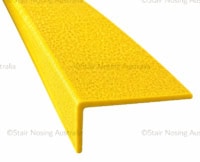
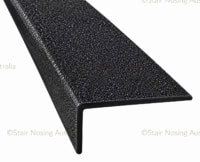
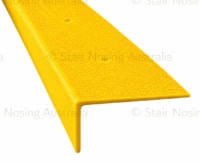
This is an example of countersunk holes
Industrial stair nosing
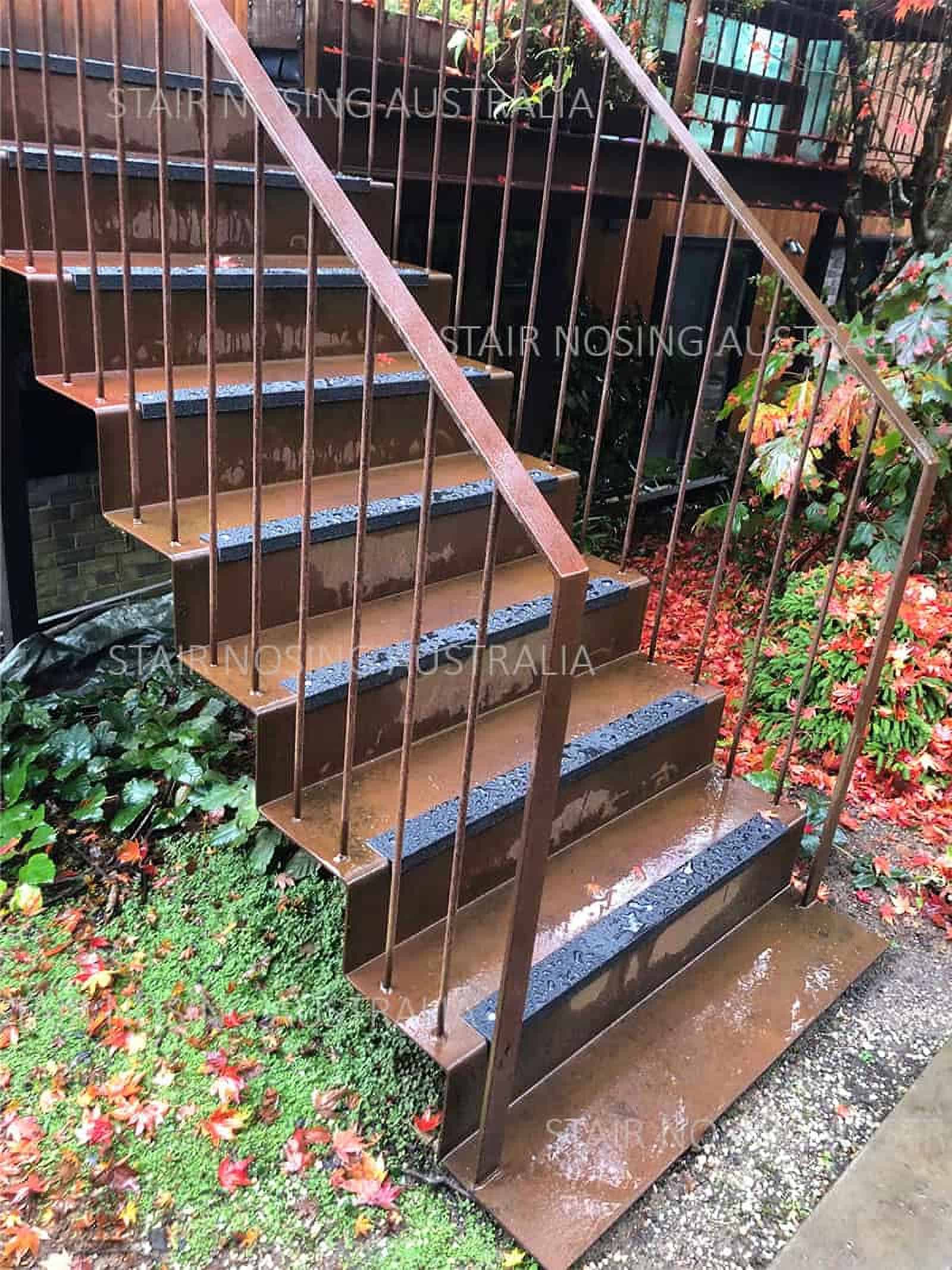
Profile 70 is used in all commercial, industrial, mining, and industrial industries.
This FRP stair nosing is a versatile stair tread and has been installed in residential buildings, high rise apartment stairwells, fire escapes, universities and schools.
1.FRP profiles have a high resistance to corrosion
2.The nosing has a has a P5 slip rating
3.The product lasts a long time and requires very little maintenance
The nosing comes in 2 sizes as below;
- Profile 70-25 has a 70 mm tread and a 25 mm face and
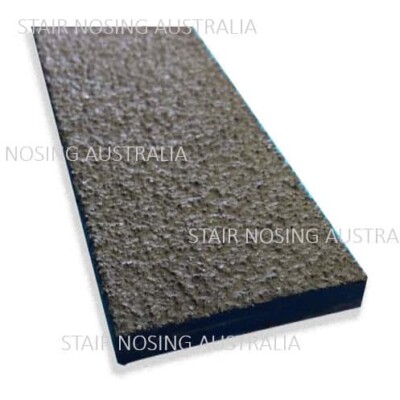
- Profile 70-10 has a 70 mm tread and a 10 mm face


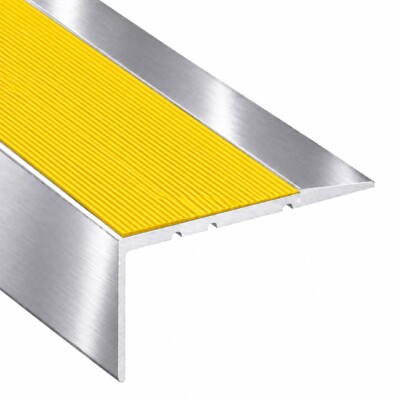
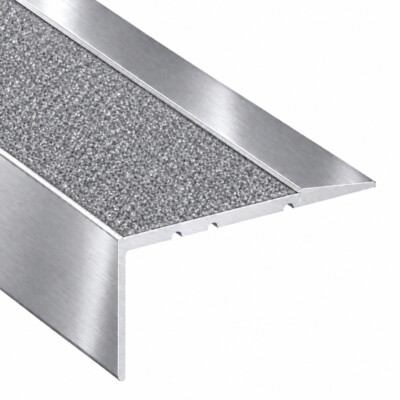
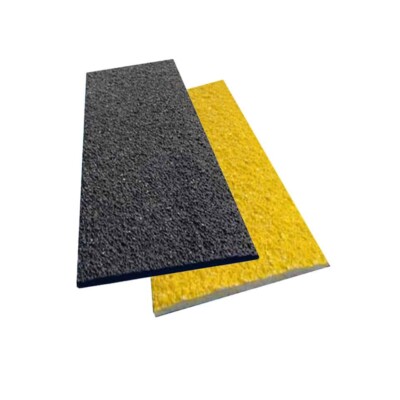
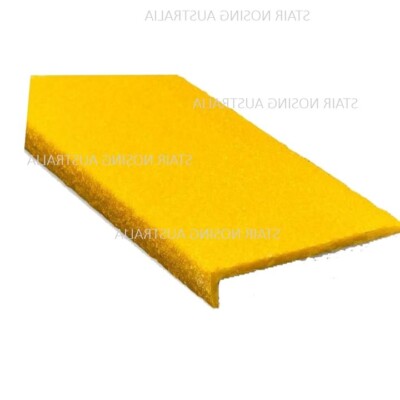
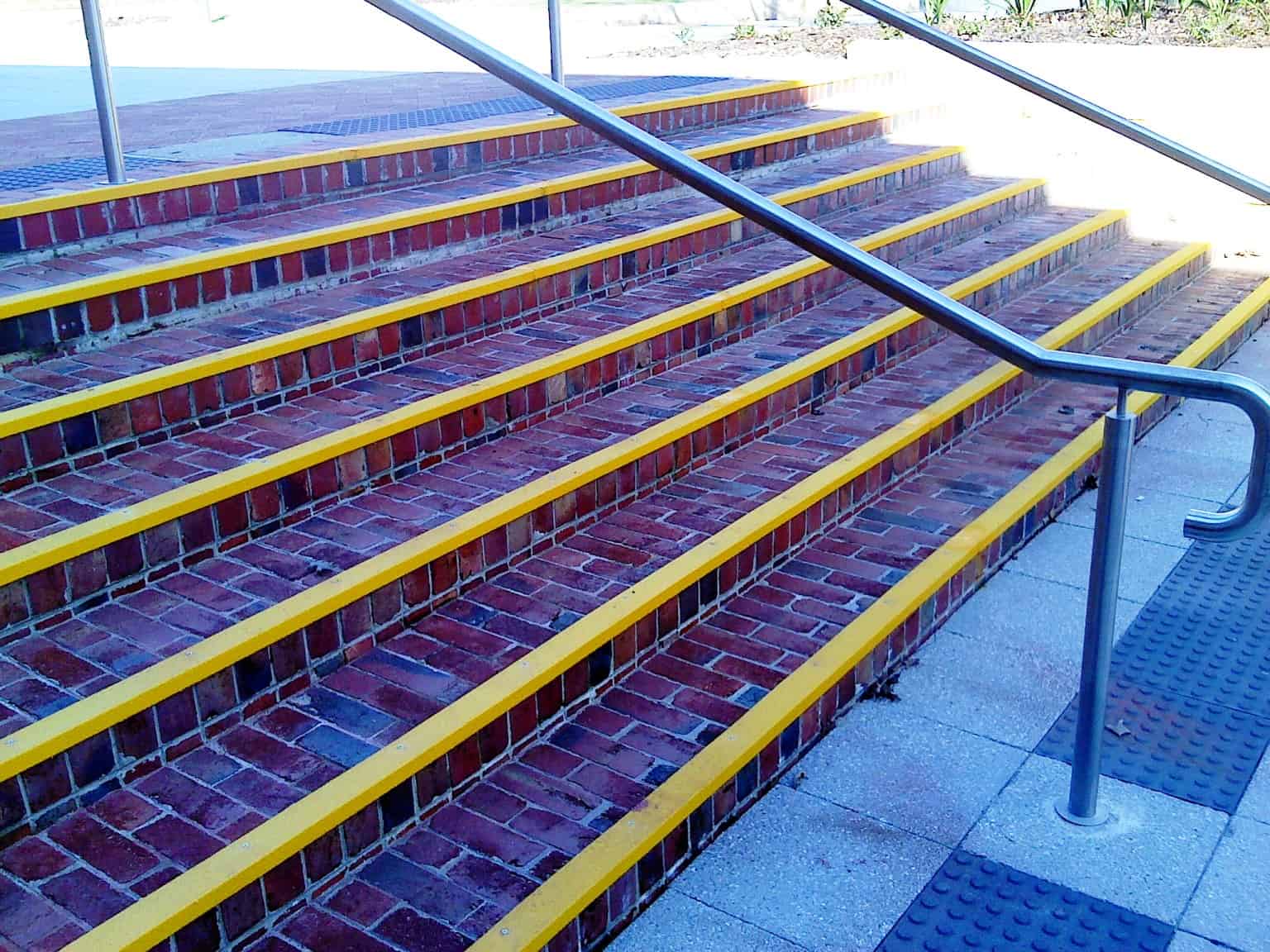
The 10 mm stair tread complies with AS1428 2009 Australian Standards and both are available in black and hi-vis yellow.
The maximum length the stair nosing can be ordered in is 3600 mm for the 70mm but it is important to note that some couriers charge high prices for shipping long lengths.
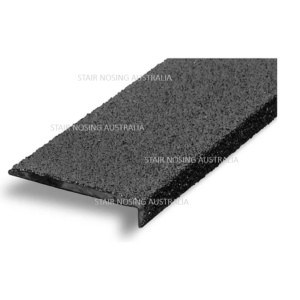
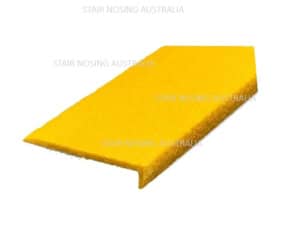
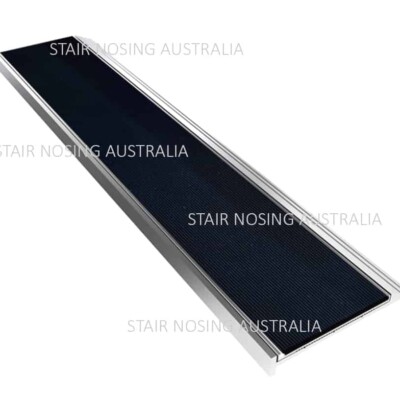
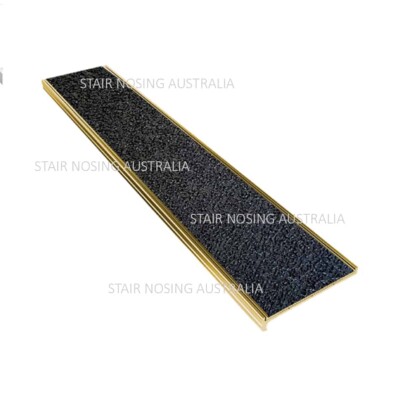
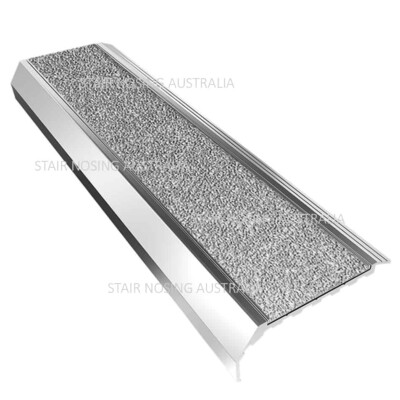
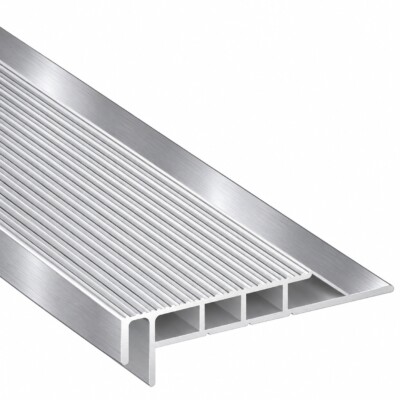
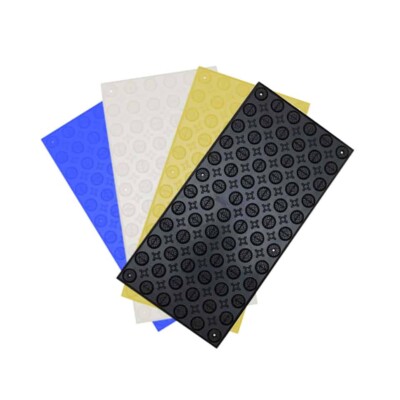

 We will expertly custom-cut the stair nosing to your specifications and countersink the holes. This approach helps you save on unnecessary material costs.
You can order stair nosing in a maximum length of 3.6 metres. However, be aware that TNT charges a high fee for oversized freight because of the manual handling involved. To save both time and money, please provide us with a cutting list.
HINT!
Industrial stair nosing
If you are not sure about the exact measurements, average the lengths giving yourself a margin for error. You may them choose to cut them to the exact width onsite.
When you install this industrial stair nosing , you typically secure it with screws, which is the most common and effective method. However, if you need to glue it, remember that this method works best on hard surfaces like porcelain, ceramics, and terrazzo tiles. For optimal results, choose T-Rex or Hi-Grab adhesive, as these options provide a strong and lasting bond.
When using the FRP stair tread with the 10 mm face is very important that stairs are level and straight, additionally we recommend an application of Soudal T-Rex Adhesive.
Installing FRP on checker plate
Installing FRP on grated steel

- Ordering
-
We will expertly custom-cut the stair nosing to your specifications and countersink the holes. This approach helps you save on unnecessary material costs.
You can order stair nosing in a maximum length of 3.6 metres. However, be aware that TNT charges a high fee for oversized freight because of the manual handling involved. To save both time and money, please provide us with a cutting list.
HINT!
Industrial stair nosing
If you are not sure about the exact measurements, average the lengths giving yourself a margin for error. You may them choose to cut them to the exact width onsite.
- Installation
-
When you install this industrial stair nosing , you typically secure it with screws, which is the most common and effective method. However, if you need to glue it, remember that this method works best on hard surfaces like porcelain, ceramics, and terrazzo tiles. For optimal results, choose T-Rex or Hi-Grab adhesive, as these options provide a strong and lasting bond.
When using the FRP stair tread with the 10 mm face is very important that stairs are level and straight, additionally we recommend an application of Soudal T-Rex Adhesive.
Installing FRP on checker plate
Installing FRP on grated steel
- Data Sheets
- Gallery
-